

Chinese tech giant ByteDance released an updated version of the neural network in February. The tool supports eight languages, including Russian and English.
The algorithm generates video based on text prompts, images, and audio files. Users praised the high quality of direction and editing, as well as the “incredibly natural, almost professional” transitions between scenes.
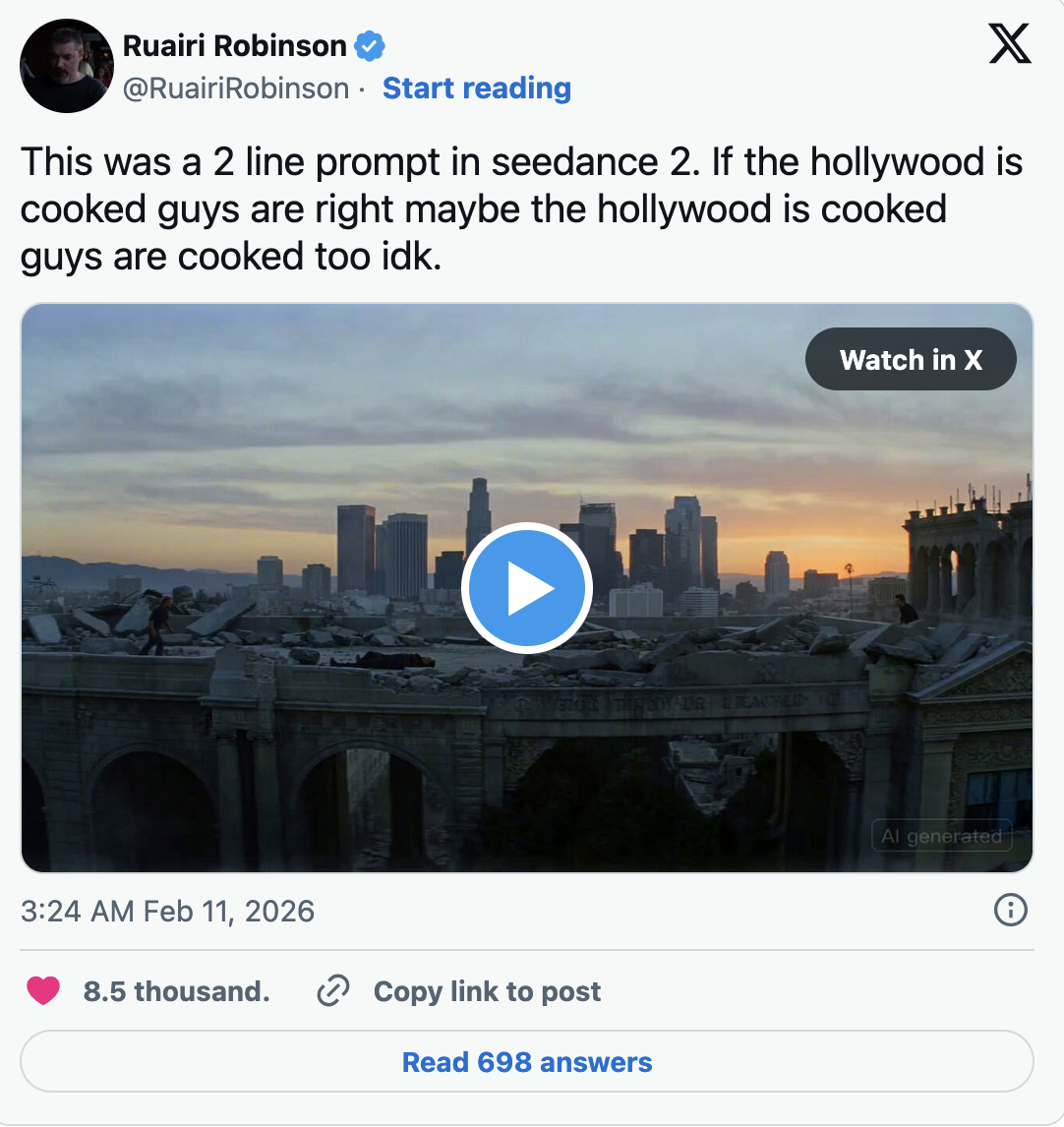
The video was created using “two lines of text prompt in Seedance 2.0” and has amassed 1.6 million views.
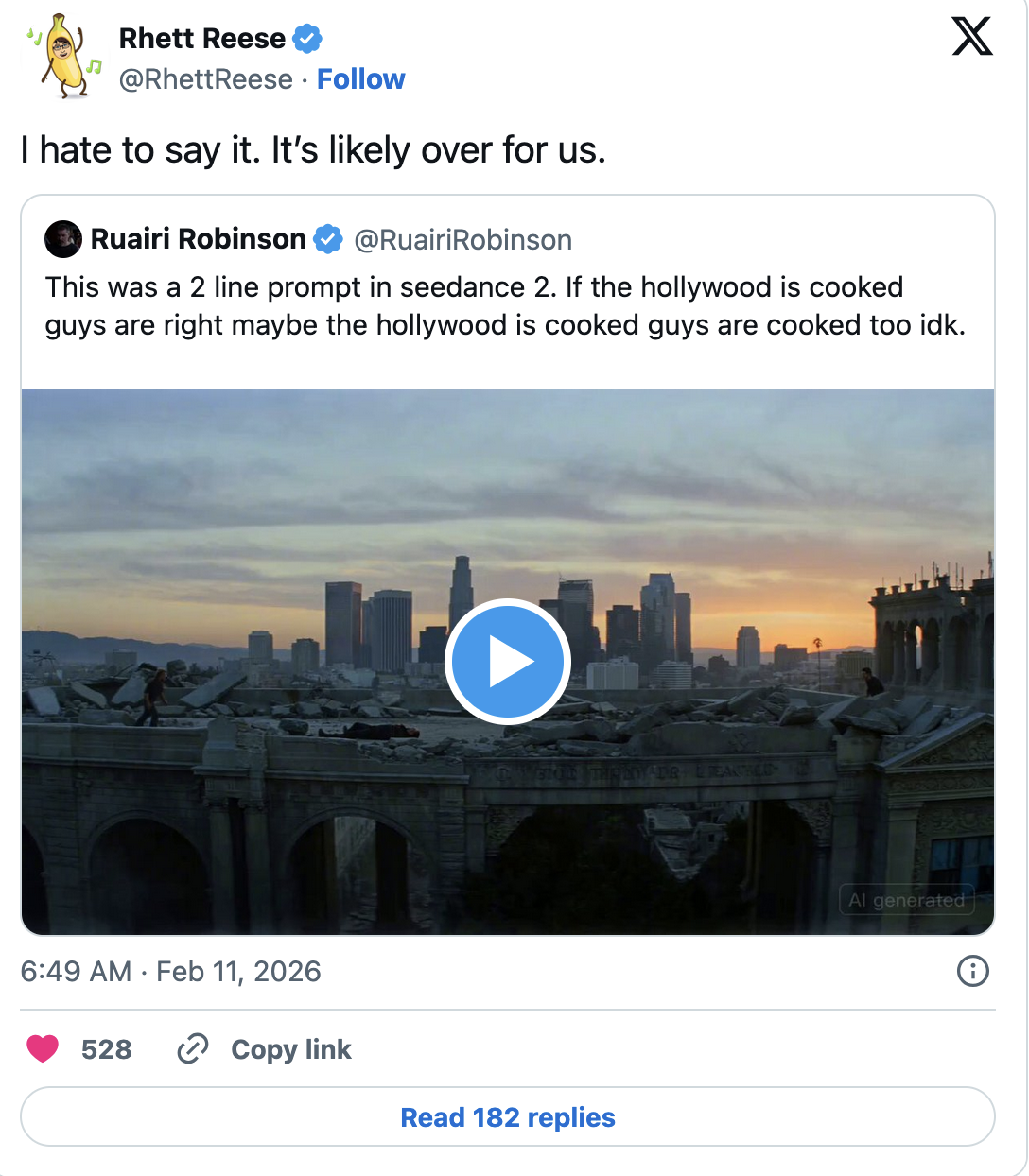
Deadpool screenwriter Rhett Reese commented on the post:
“I hate to say this, but it’s probably over for us.”
Shortly after, the Motion Picture Association released a statement from CEO Charles Rivkin, demanding that ByteDance “immediately cease its unlawful activities”:
“In just one day, the Chinese AI service Seedance 2.0 carried out mass unauthorized use of American copyrighted works. By launching this tool without meaningful safeguards against infringement, ByteDance is disregarding long-standing copyright law that protects creators and supports millions of U.S. jobs.”
The entertainment industry coalition Human Artistry Campaign called Seedance 2.0 “an attack on every creator in the world.” The actors’ union SAG-AFTRA backed the studios’ position, condemning the project for clear violations:
“These include the unauthorized use of the voices and likenesses of our members. This is unacceptable and undermines the ability of talented people to earn a living. Seedance 2.0 ignores the law, ethics, industry standards, and the fundamental principle of consent.”
The Walt Disney Company sent ByteDance a cease-and-desist letter, accusing the company of distributing a service “preloaded with a pirated library of copyrighted Disney characters from Star Wars, Marvel, and other franchises.”
The letter cites numerous examples in which Seedance 2.0 generated content featuring Spider-Man, Darth Vader, Grogu, and Peter Griffin.
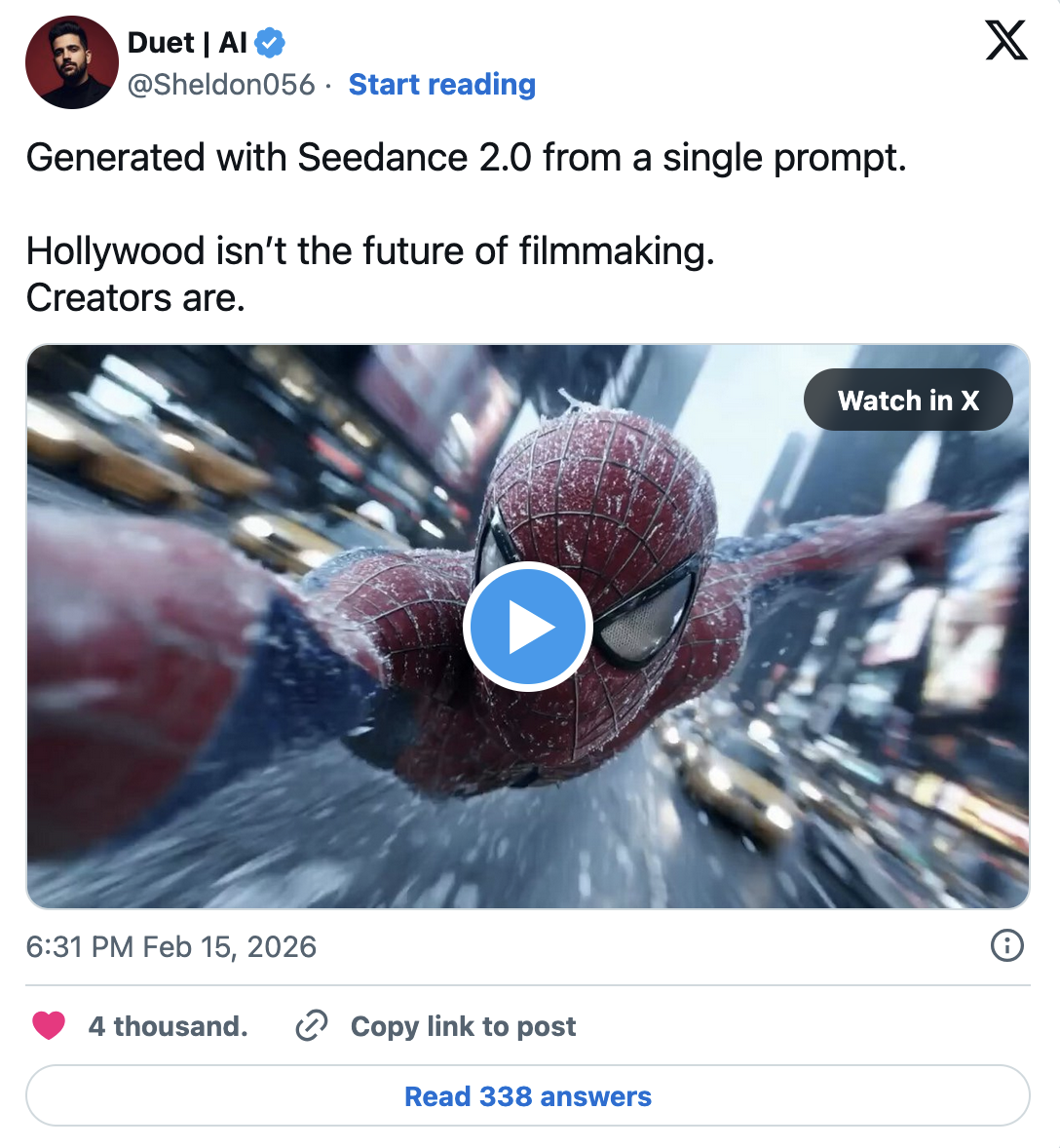
Paramount took similar action.
Numerous videos featuring famous characters and actors created with Seedance 2.0 have since appeared on X.
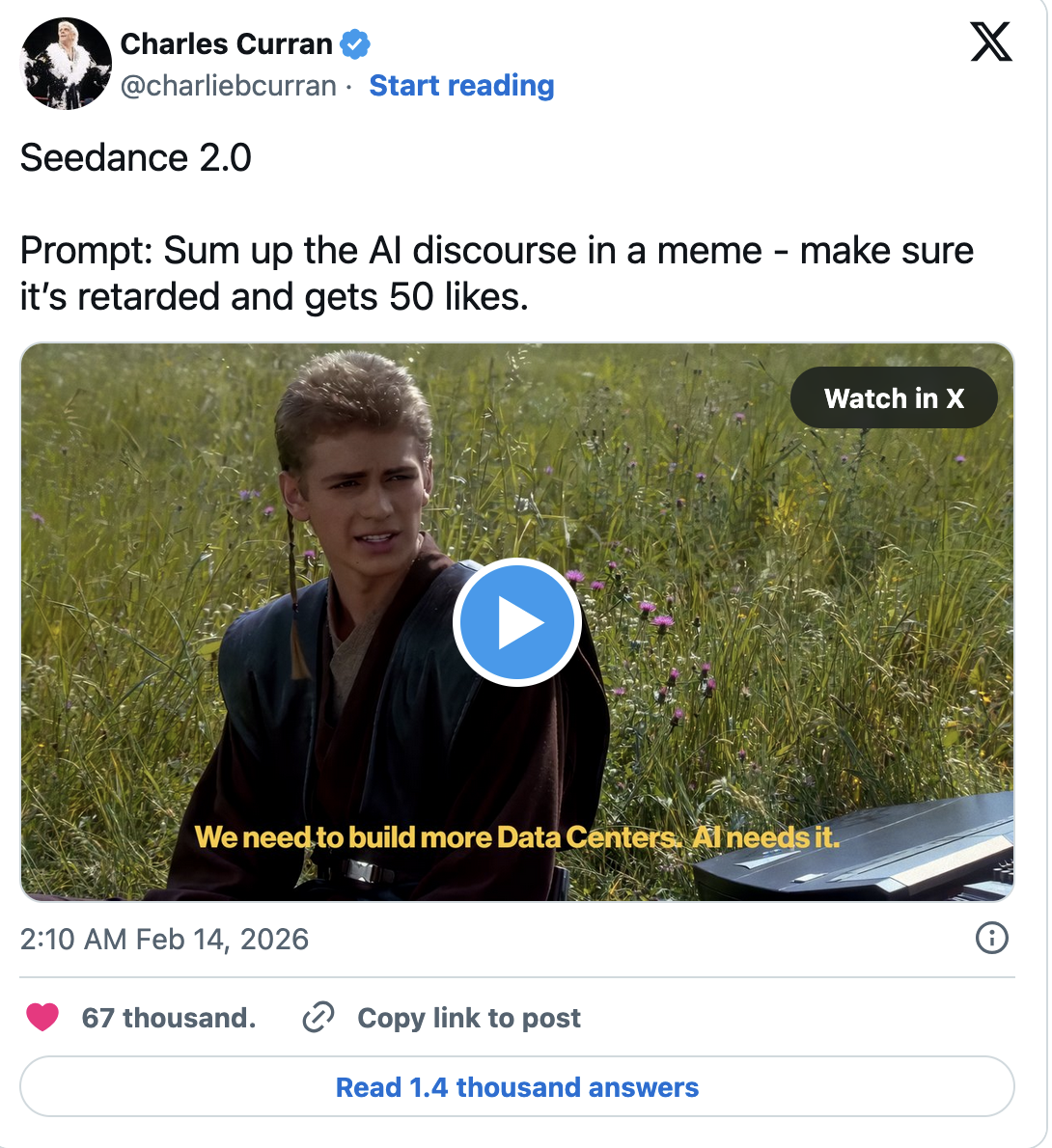
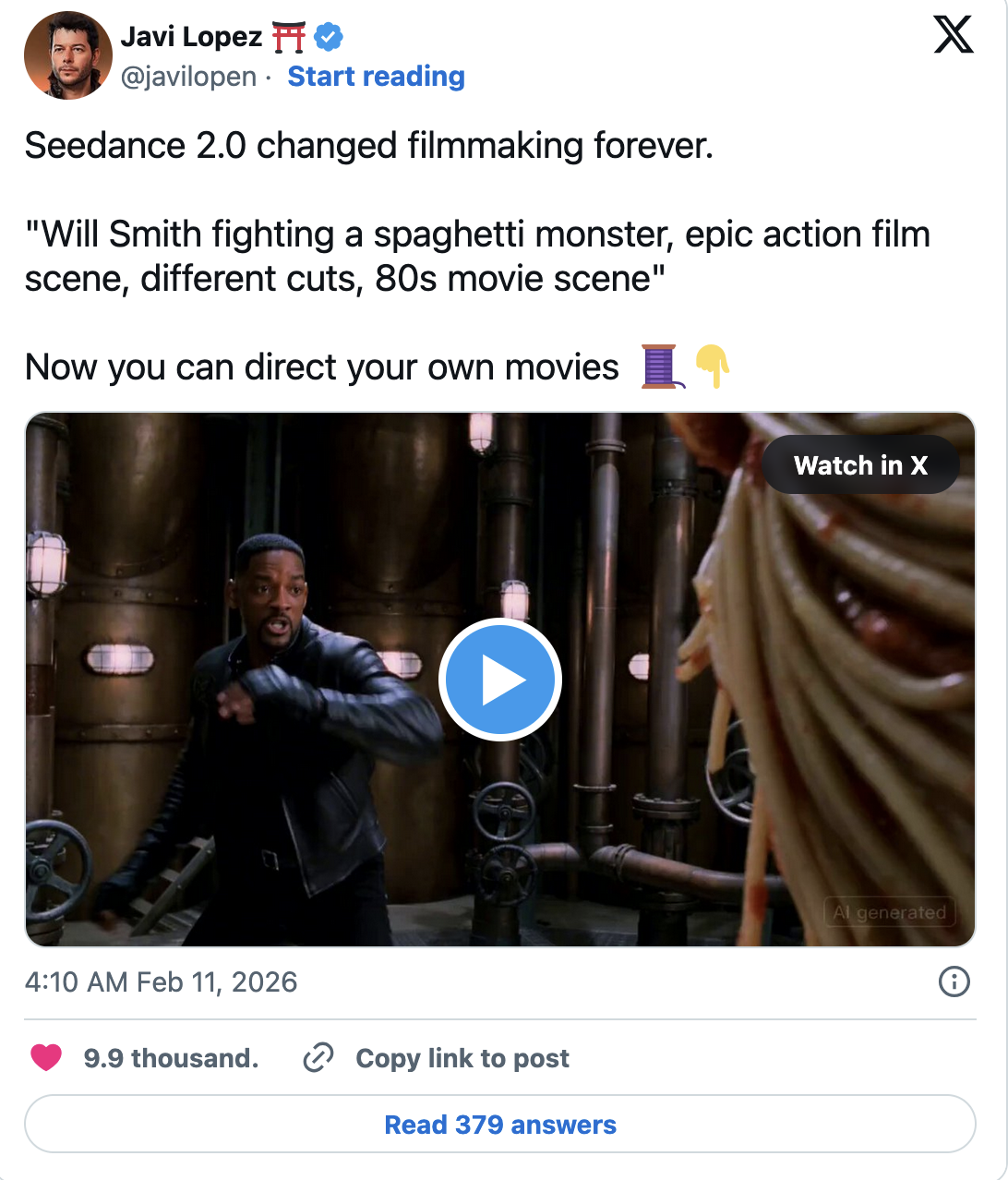
Another example shows Will Smith fighting a spaghetti monster.
Other countries
Pressure on ByteDance is also mounting outside the United States. Japan’s Cabinet has launched an investigation into the company over potential copyright violations.
The probe was triggered by the spread of social media content featuring characters from popular anime and manga, including Detective Conan and Ultraman.
“We cannot ignore a situation where content is used without the permission of the copyright holder,” said Japan’s Minister for AI Policy, Kimi Onoda.
Seedance 2.0 has also sparked controversy within China due to its ability to synthesize a user’s voice based on a photograph.
Doubao app user Shi Yu said she felt uncomfortable when the neural network generated a video with a voice very similar to her own. The system likely matched her face with other videos available online.
“It feels like personal privacy has taken a back seat,” she said.
ByteDance’s response
ByteDance said it is working to strengthen safeguards in Seedance 2.0.
“We respect intellectual property rights and have heard the concerns regarding Seedance 2.0. We are taking steps to enhance protective measures to prevent unauthorized use of intellectual property,” the company said in a statement.
Under mounting criticism, ByteDance has restricted personalization features in Seedance 2.0. The model no longer allows users to upload real people’s faces as references for video generation.
Rui Ma, founder of consulting firm Tech Buzz China, suggested that the scandal may have been a deliberate move by ByteDance, designed to draw attention to Seedance 2.0’s technical capabilities.
 ES
ES  EN
EN