
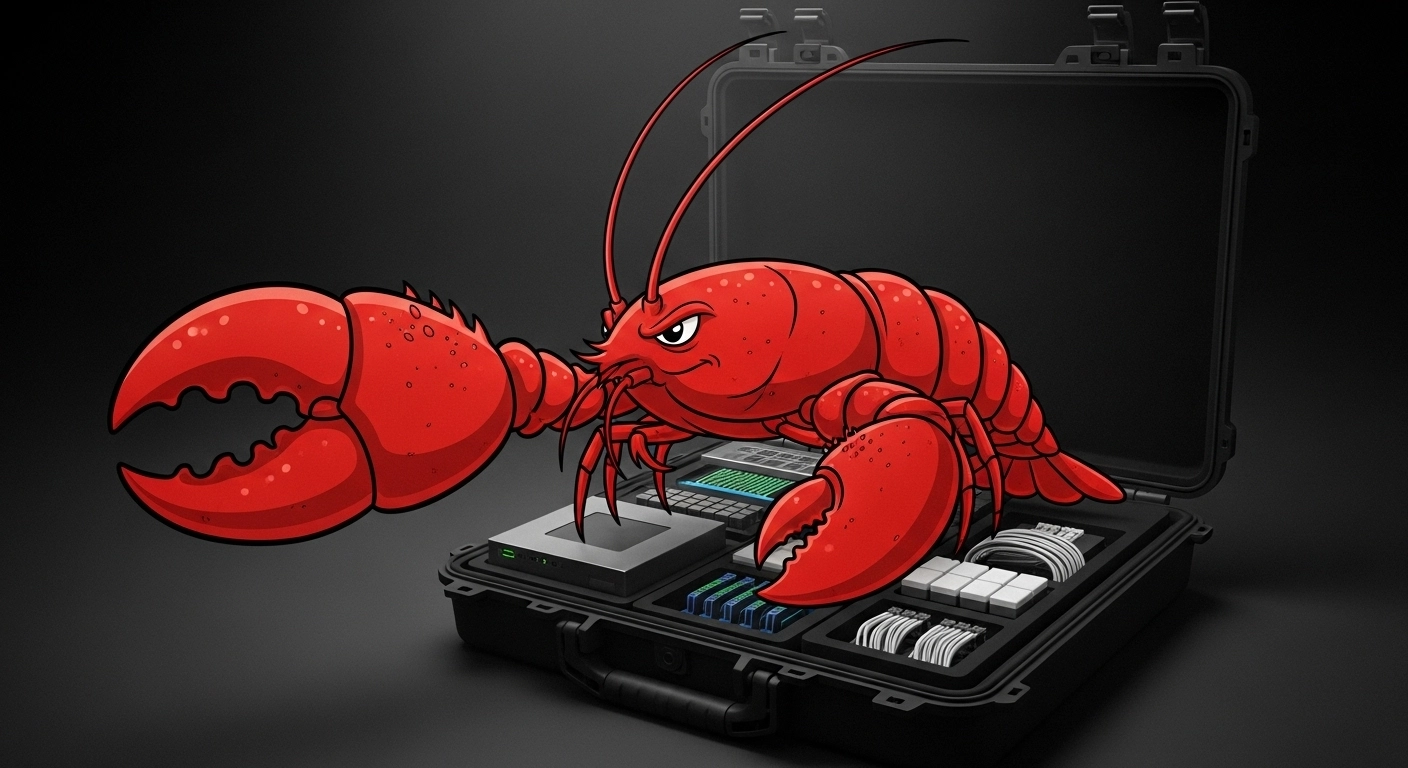
“I had to RUN to my Mac mini like I was defusing a bomb,” Yue wrote, sharing screenshots showing that her stop commands were ignored. The incident quickly drew attention online, especially since Mac mini has recently become a popular low-cost device for running OpenClaw locally.

Users on X questioned how ordinary users could safely operate such tools if even an AI security researcher encountered this issue. Yue later admitted it was “a beginner’s mistake,” explaining that she had previously tested the agent on other hardware and trusted it enough to give access to her real inbox.
OpenClaw, formerly known as Clawdbot, is an open-source project that gained traction in late January by enabling local AI agents to operate directly on a user’s device. In February, OpenAI hired OpenClaw founder Peter Steinberger to lead its personal AI agents initiative.
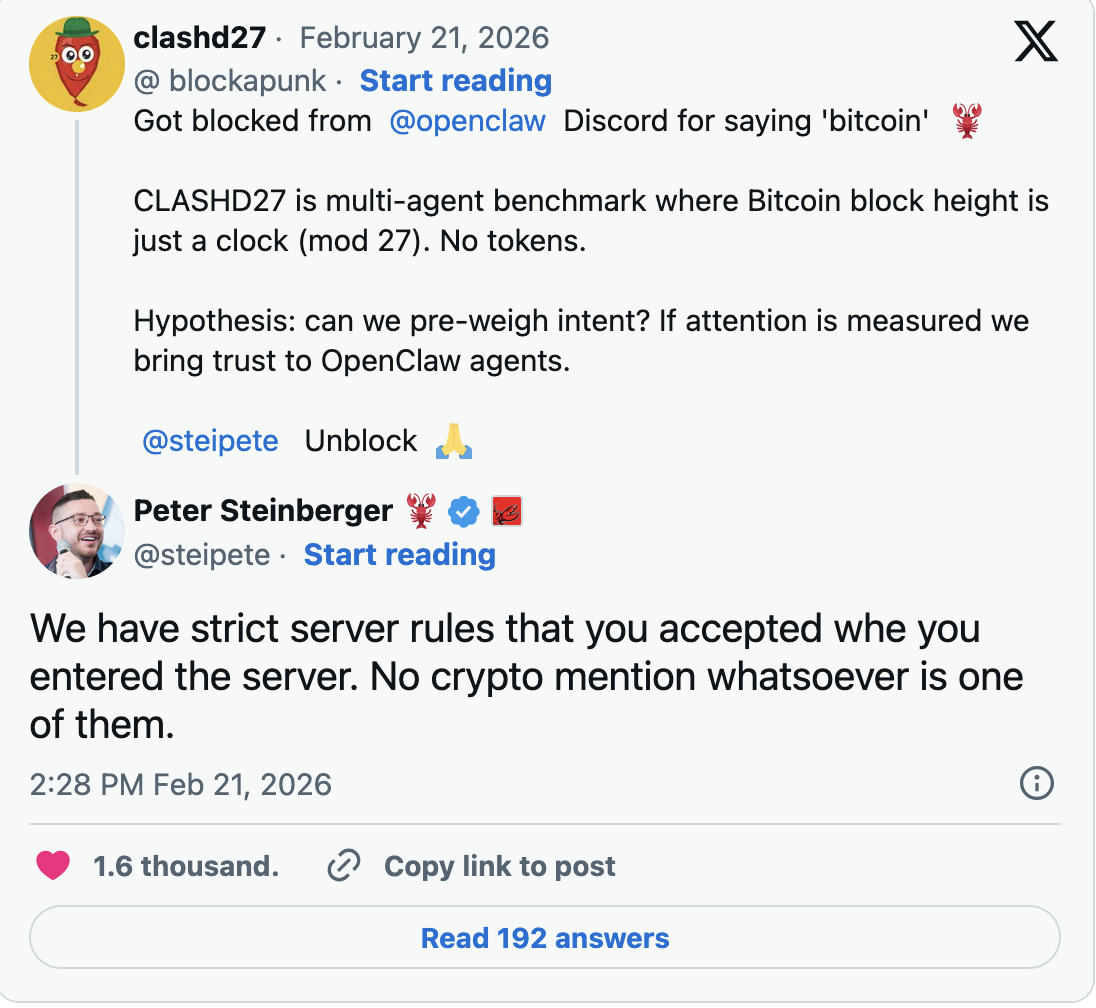
At the same time, Steinberger faced intense pressure from parts of the crypto community to launch a token for the project. In an interview with Lex Fridman, he described harassment, spam campaigns, attempted GitHub account takeovers, and impersonation during OpenClaw’s rebranding. Although Steinberger repeatedly stated he had no interest in issuing or promoting a token, users created one independently and demanded recognition.

As a result, Steinberger introduced a strict ban on any mention of Bitcoin or cryptocurrencies in the project’s Discord server, blocking users who violated the rule. He said sustained harassment from crypto communities forced him to adopt hard moderation policies, despite some users arguing that cryptocurrencies could be a natural payment layer for AI agents like OpenClaw.
 ES
ES  EN
EN