

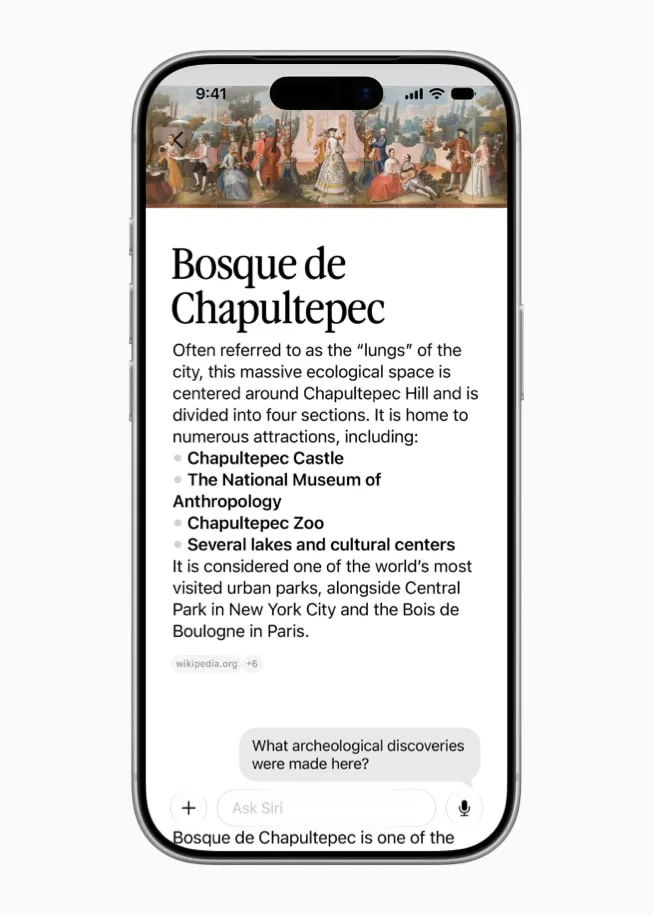
The updated AI-powered Siri can understand personal context and on-screen content, access up-to-date information from the internet, and interact with apps. The assistant will be able to search for information in Messages, Mail, Photos, and other sources.
Apple Intelligence supports everyday system scenarios:
- in Passwords, the system will be able to automatically update weak and compromised passwords;
- in Safari, new features include Notify Me for tracking changes on a webpage and Describe an Extension for creating extensions based on a text prompt;
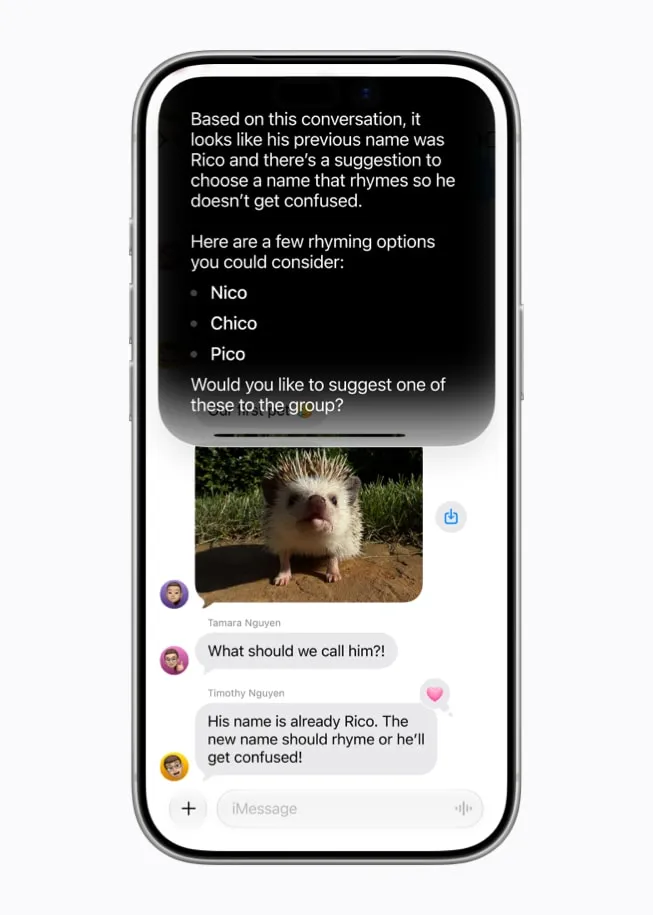
- Messages and Mail now include contextual suggestions and Smart Reply based on the user’s style;
- in Phone, the Call Context feature can pull up relevant information during a call with a company, such as a booking code or confirmation number;
- in Calendar, users can create and edit events using a text description;
- in Shortcuts, the Describe a Shortcut feature makes it possible to build action chains through natural-language descriptions.
Apple clarified that Siri AI is built on the next generation of Apple Intelligence and uses Apple Foundation Models, or AFM, which run both locally on the device and through the cloud. When requests are processed remotely, users’ personal data is not stored or shared.
The company also updated its developer tools. The AFM stack, which Apple describes as a native Swift API, now supports multimodal requests and external language models such as Claude and Gemini.
The announcement comes amid controversy over the delay of previous Siri AI features. In May, Apple agreed to settle a consumer class-action lawsuit for $250 million. The company was accused of overstating the advertised AI capabilities ahead of the iPhone 16 release.
Conclusion:
Siri AI marks Apple’s next major step in integrating artificial intelligence across its device ecosystem. However, the launch also comes under pressure after delays in previous Siri AI features and legal scrutiny over Apple’s earlier AI marketing claims.
 ES
ES  EN
EN