
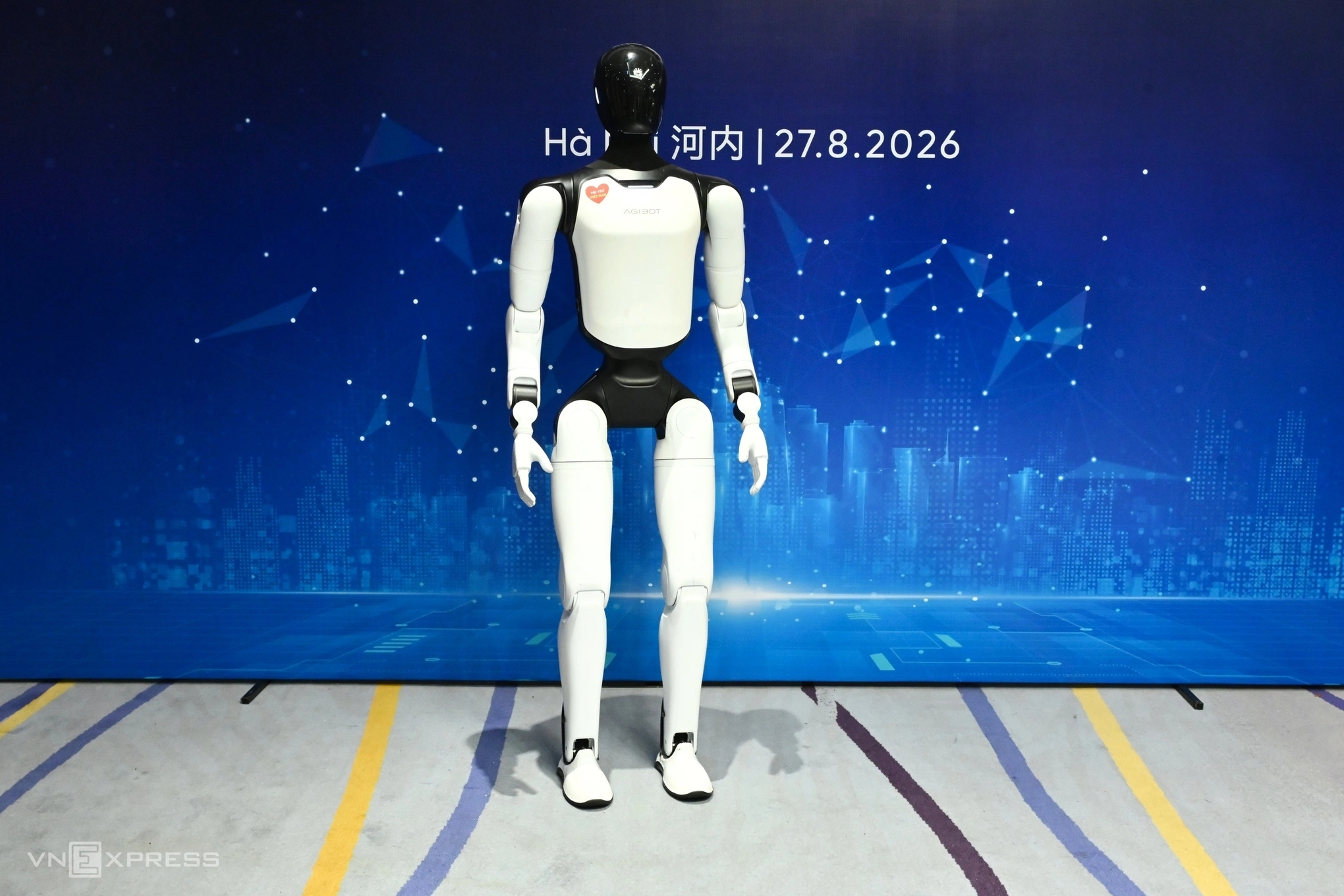
“We will work together to build AI factories in Vietnam,” Yang Xin, Director of the Industrial Research Institute at the Hong Kong Chamber of Commerce in Shenzhen, said at the Vietnam–China Dialogue Forum on AI and the Digital Economy on August 27.
According to Yang, investment demand for artificial intelligence is growing exponentially. Citing Gartner data, he said global AI spending is expected to reach around $2.59 trillion this year, up 47%, with infrastructure accounting for 55% of total spending.
Vietnam’s data center market could expand rapidly
Yang described Vietnam’s data center market as “small, but fast and inexpensive.” The country currently has around 148 MW of operational data center capacity, but the sector is expected to expand significantly in the coming years.
Under current development plans, total capacity could exceed 870 MW, roughly six to seven times the present level, with annual growth of around 20% through the beginning of the next decade.
Lower construction and investment costs are another advantage for Vietnam. According to figures cited by Yang, the median cost of building 1 MW of data center capacity in Vietnam is approximately $7.2 million. That compares with $14.4 million in Singapore, $9.6 million in Malaysia and $8.8 million in Thailand.
The push comes as Asian markets increasingly compete to attract the infrastructure required for large-scale AI workloads. India, for example, has introduced major incentives aimed at attracting global AI cloud providers and new data center investment.
However, Vietnam still faces limitations in power supply and computing capacity. Yang said the country may need two to three years to add another 100 MW of power capacity.
In terms of computing resources, Vietnam currently has only around 10,000–15,000 GPUs, while South Korea has approximately 50,000–60,000 GPUs. Limited land availability and project deployment capacity are also among the challenges facing the country.
“This is an opportunity for China to help you,” Yang said.
China proposes joint AI infrastructure development
Yang outlined several areas of potential cooperation between China and Vietnam, starting with the joint development of computing infrastructure and data centers.
“Vietnam can contribute land, electricity and permits; funding can come from Hong Kong, while China provides equipment, energy solutions and GPU computing systems,” he said.
The two countries could also cooperate on localized open-source AI models and AI agents designed for manufacturing, cross-border logistics, smart border crossings and agricultural product traceability.
Jonathan Choi, Chairman of Hong Kong-based Sunwah Group, expressed a similar view, arguing that China and Vietnam have different strengths that could complement each other.
After years of AI development, China has accumulated significant experience in research, technology and practical deployment. The country's AI industry itself is increasingly shifting from a race to build ever more powerful models toward enterprise applications, commercialization and real-world AI use cases.
At the same time, Vietnam’s rapid digital transformation is creating a wide range of potential scenarios for artificial intelligence.
“Chinese companies can build on their technological strengths, application experience and understanding of the Vietnamese market to work with Vietnamese partners in developing solutions suited to local needs,” Choi said.
Vietnam could become a testing ground for AI solutions
Nguyễn Khắc Lịch, Director General of the Authority of Digital Technology and Artificial Intelligence under Vietnam’s Ministry of Science and Technology, said Vietnam and China have “broad room for cooperation.”
According to Lịch, the two countries can complement each other in areas including artificial intelligence, the digital economy, semiconductors, smart manufacturing, research and development, and workforce training.
He said the relationship should move “from economic connectivity to technological connectivity, from simple technology transfer to co-creation, and from attracting investment to jointly developing ecosystems and talent.”
Lịch proposed that Chinese and Vietnamese companies jointly build an AI and digital economy ecosystem in which businesses from both countries conduct research, localize technologies and develop solutions together.
Under this model, Vietnam could serve not only as a market but also as a testing ground where products are developed and refined before expanding internationally.
“Vietnam would be both a market and a testing ground for refining products, while also serving as a springboard for Chinese AI solutions to expand across ASEAN and the rest of the world,” Lịch said.
Official source: Posts and Telecommunications Institute of Technology (PTIT)
 ES
ES  EN
EN